Blog
Explore insights, guides, tutorials, and ideas across AI, technology, productivity, and other topics worth reading.
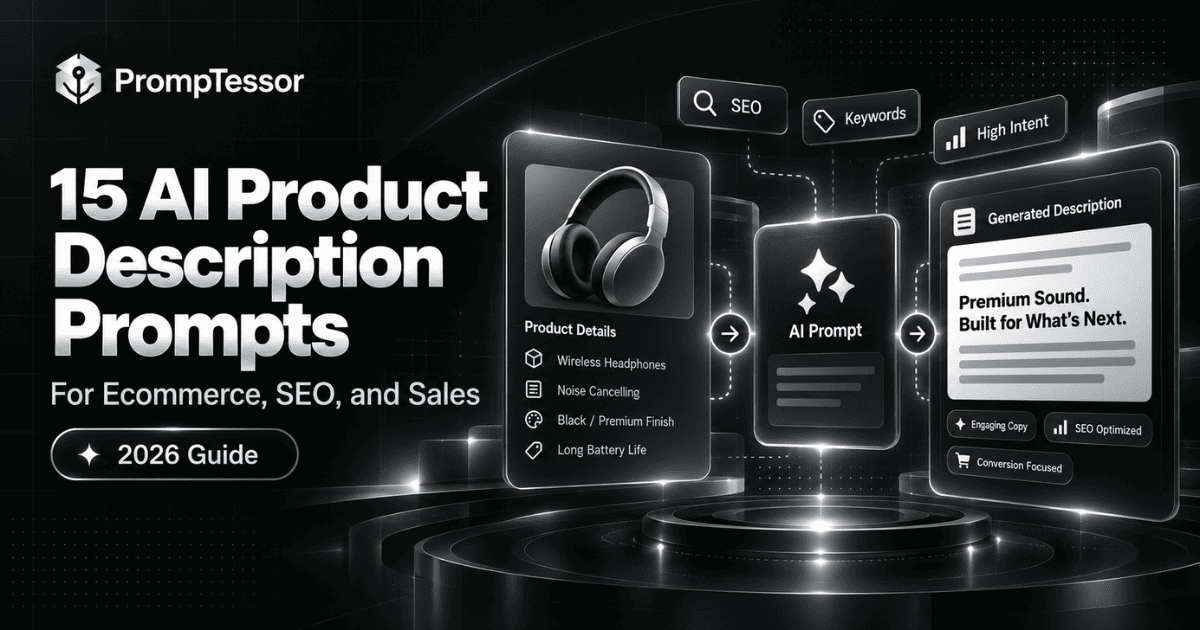
15 AI Product Description Prompts for Ecommerce, SEO, and Sales 2026
Copy 15 practical AI product description prompts for product pages, SEO, marketplace listings, variant catalogs, and fact-checked ecommerce copy.
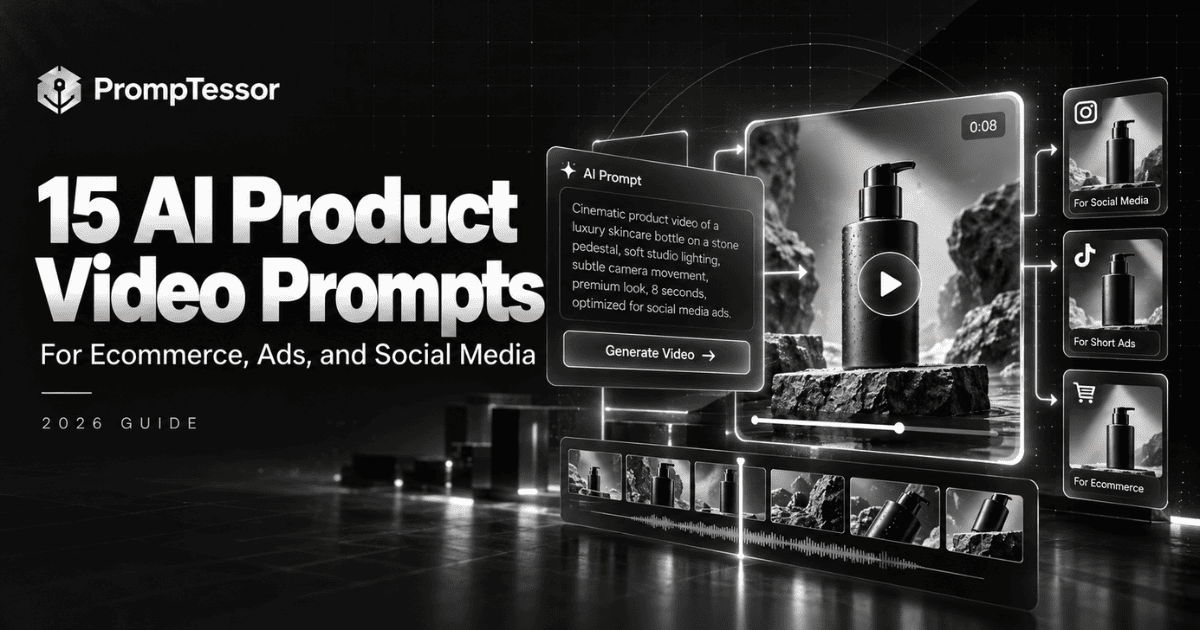
15 AI Product Video Prompts for Ecommerce, Ads, and Social Media (2026)
Create better ecommerce product videos with 15 adaptable AI video prompts for clean showcases, realistic demos, cinematic reveals, short ads, and image-to-video production. Includes product-identity safeguards and a practical approval checklist.

15 AI Product Photography Prompts for Ecommerce, Ads, and Product Images (2026)
Create better product images with 15 copyable AI photography prompts for ecommerce, studio and lifestyle scenes, ad creatives, and safe reference-based edits.
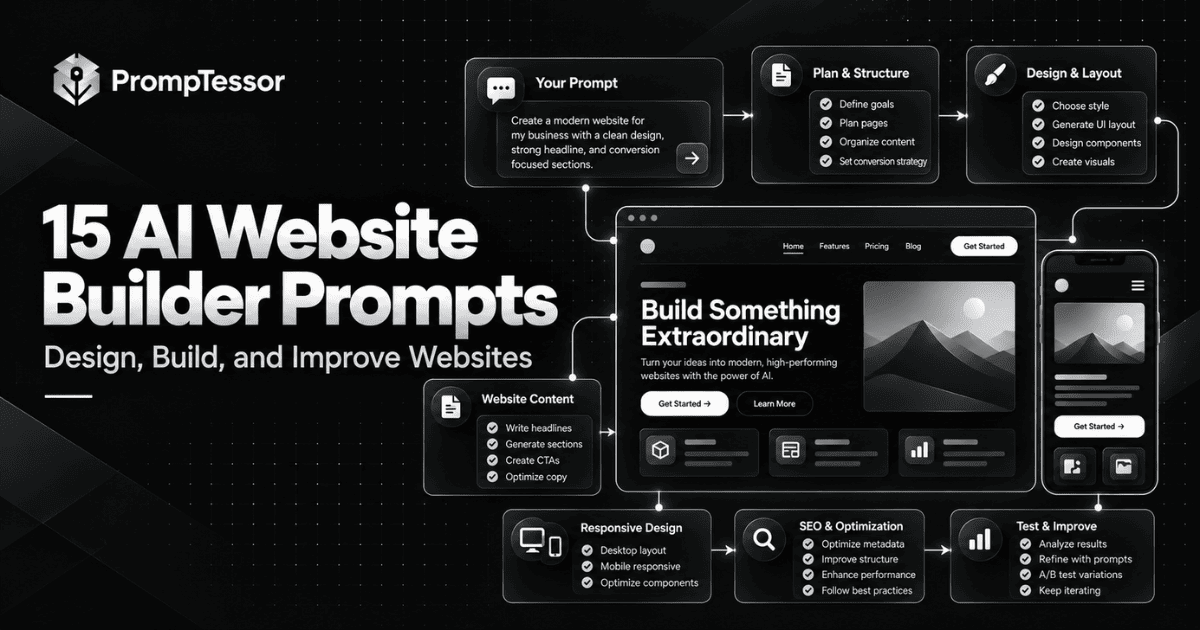
15 AI Website Builder Prompts to Design, Build, and Improve Websites
Use 15 editable AI website builder prompts to plan website pages, generate landing pages, design responsive interfaces, improve content and SEO, and test the result before publishing.
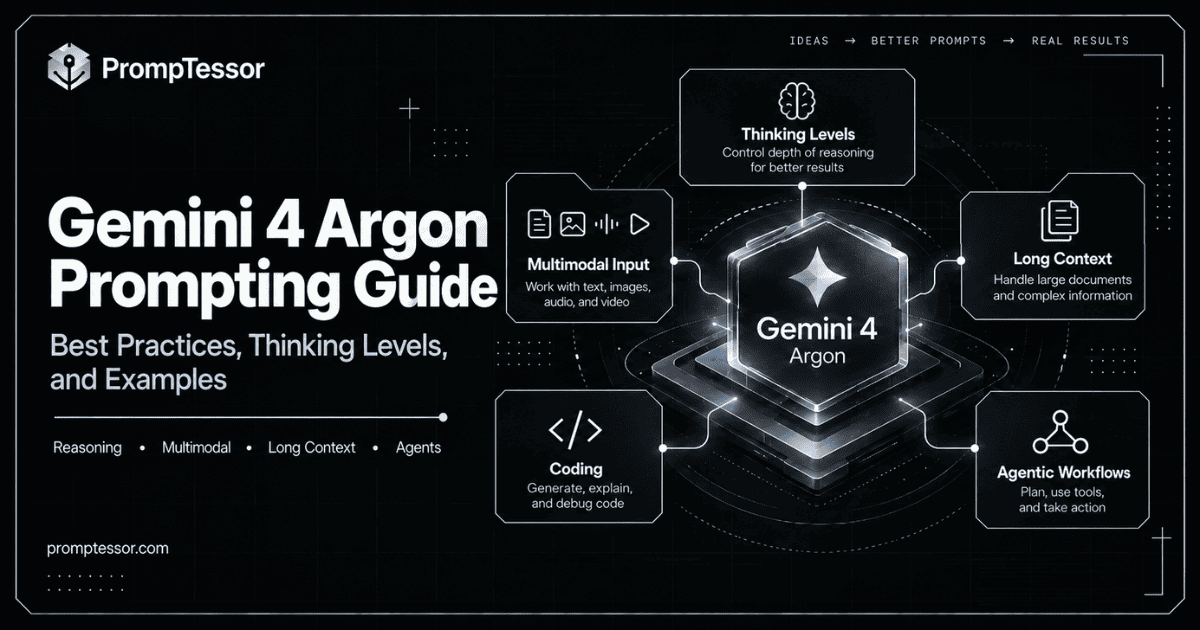
How to Prompt Gemini 4 Argon: Best Practices, Thinking Levels, and Examples
A practical, source-grounded Gemini 4 Argon prompting guide with thinking-level tradeoffs, a reusable prompt structure, copyable examples for coding, research and multimodal work, plus API and pricing notes.
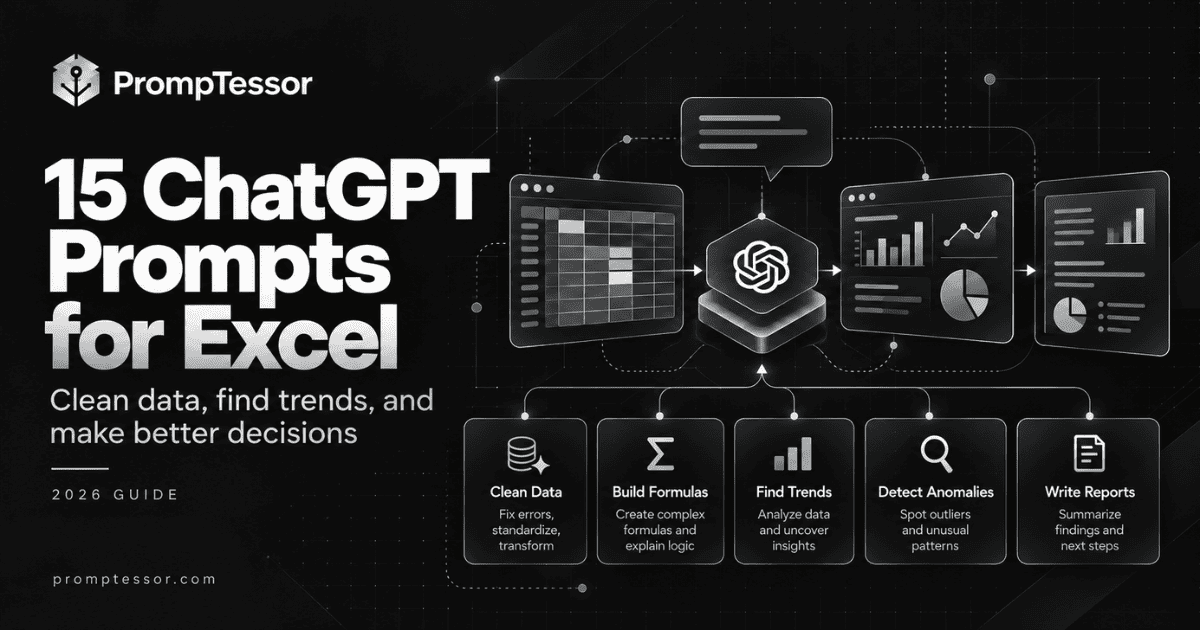
15 ChatGPT Prompts for Excel: Clean Data, Find Trends, and Make Better Decisions
Copy 15 practical ChatGPT prompts for Excel to audit messy spreadsheets, build formulas, investigate trends, spot anomalies, create charts, and turn analysis into decisions.
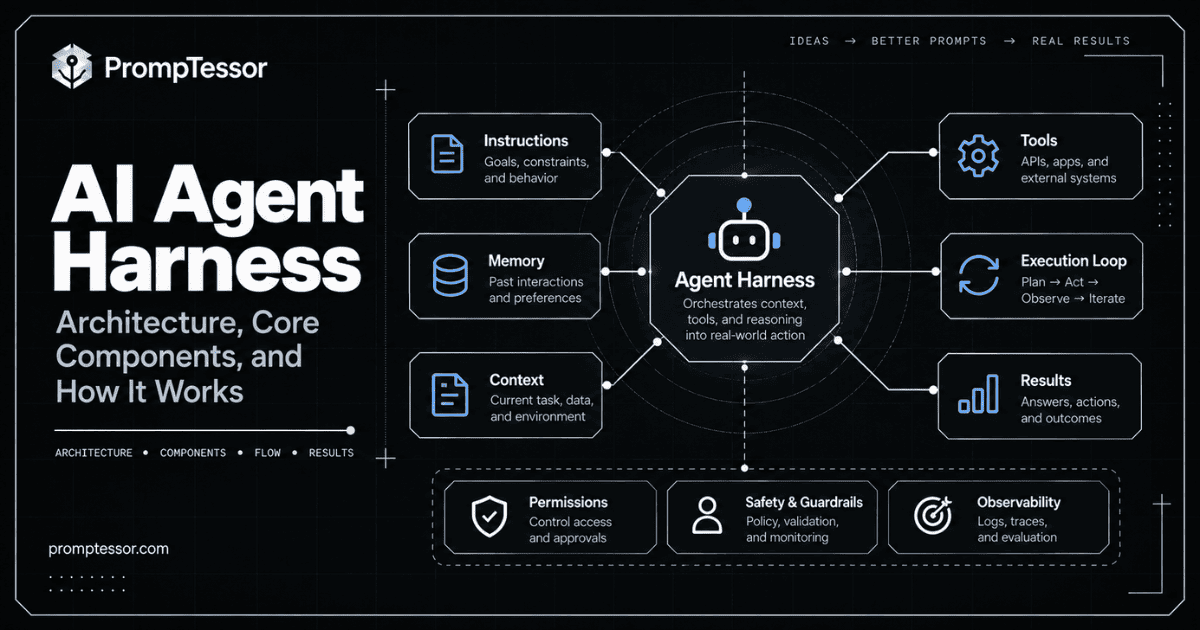
AI Agent Harness: Architecture, Core Components, and How to Build One
An AI agent harness is the runtime scaffolding around a language model. Explore its architecture, model-tool execution loop, context management, safety controls, and a practical minimal TypeScript harness.
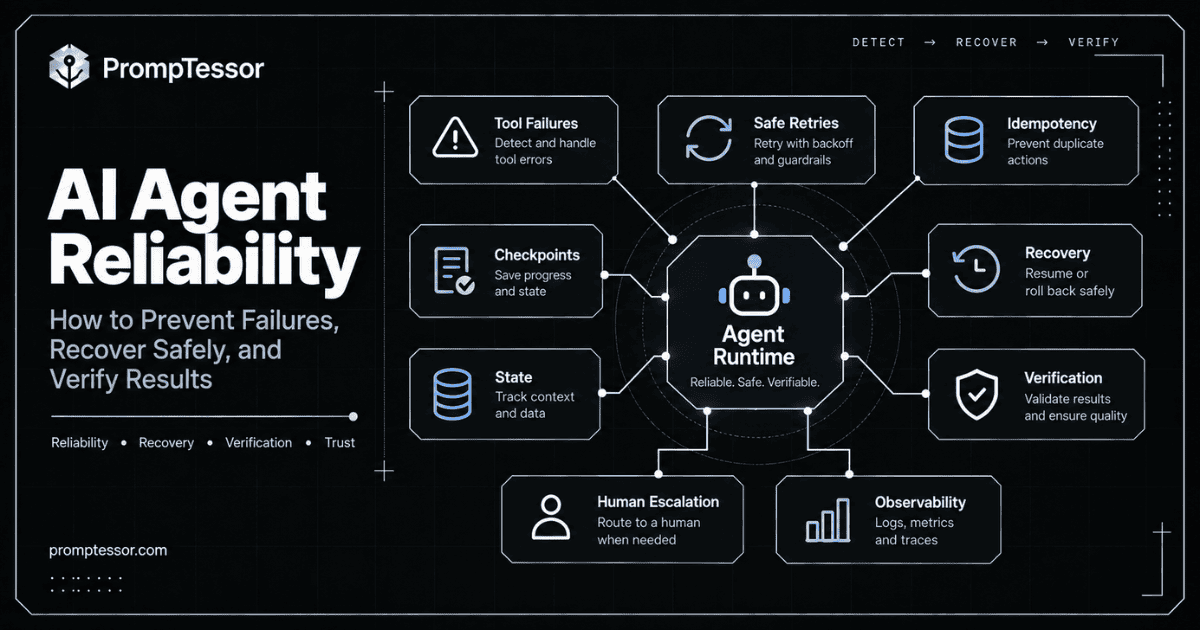
AI Agent Reliability: How to Prevent Failures, Recover Safely, and Verify Results
Reliable AI agents do more than produce good answers. They detect failure, preserve valid progress, retry safely, recover from crashes, verify external effects, and stop instead of pretending a failed workflow succeeded.
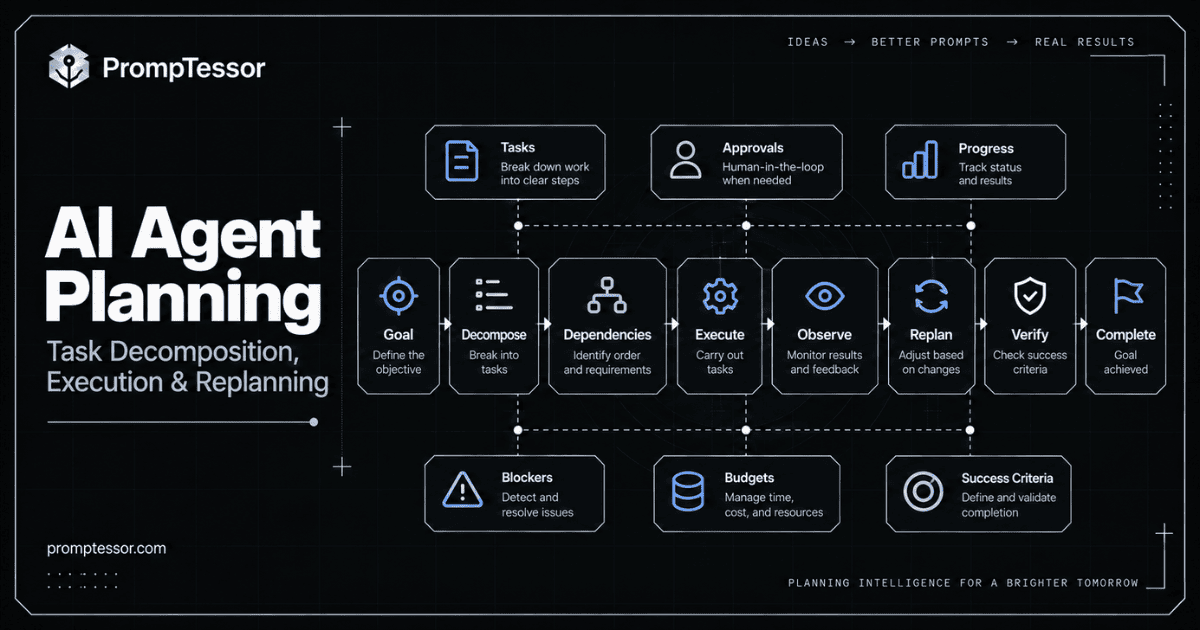
AI Agent Planning: How Agents Break Goals Into Tasks, Execute Plans, and Replan
AI agent planning turns a high-level goal into trackable work, orders dependencies, executes the plan, observes what changes, and revises the plan when reality no longer matches the original assumptions.