Blog
Explore insights, guides, tutorials, and ideas across AI, technology, productivity, and other topics worth reading.
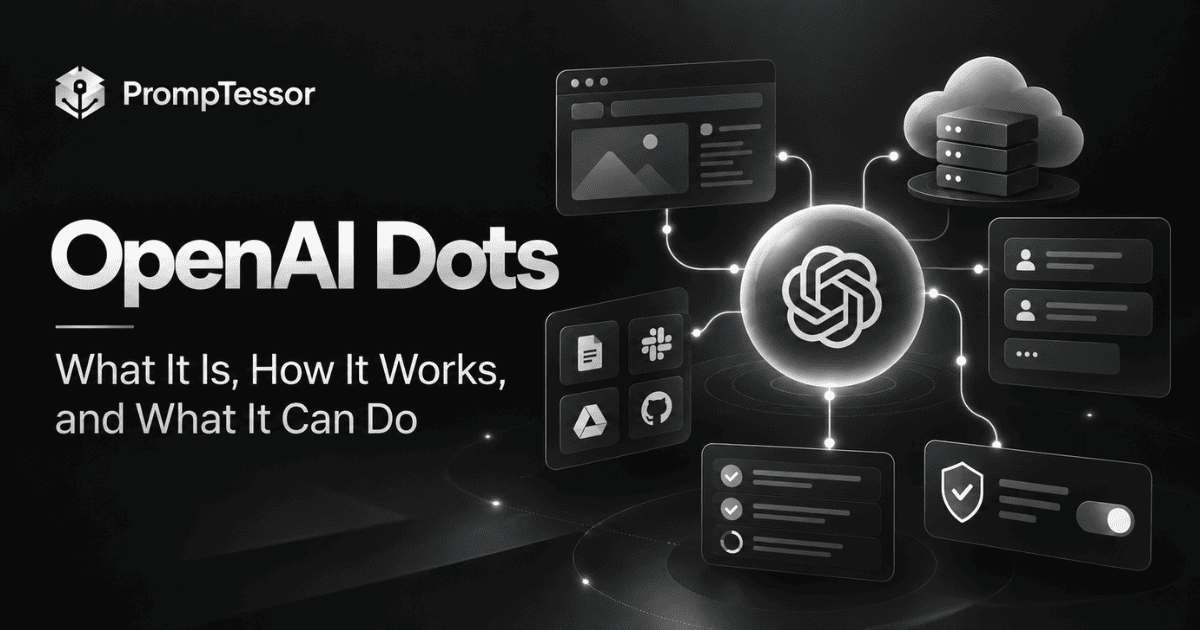
OpenAI Dots: What It Is, How It Works, and What It Can Do
OpenAI Dots are always-on agents powered by GPT-6 Astra that can work across connected apps, use their own cloud computer and browser, maintain context across channels, and continue projects between conversations. This guide explains how Dots work, what they can do, their safeguards, availability, and how to give persistent agents better instructions.
How to Prompt GPT-6.1 Sol: Best Practices, Reasoning, and Examples
A practical GPT-6.1 Sol prompting guide covering reasoning effort, coding, agents, computer use, complex documents, long context, structured outputs, tool use, migration from GPT-6 Sol, and prompt examples.
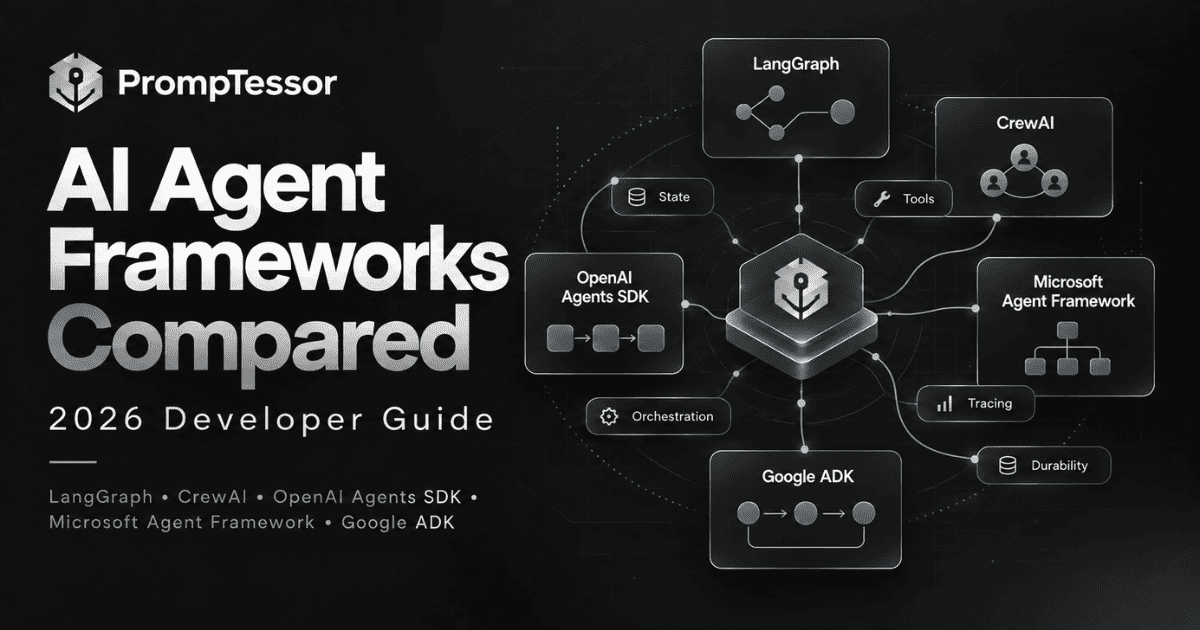
AI Agent Frameworks Compared in 2026: LangGraph, CrewAI, OpenAI Agents SDK, Microsoft Agent Framework, and Google ADK
A practical 2026 comparison of LangGraph, CrewAI, OpenAI Agents SDK, Microsoft Agent Framework, and Google ADK, focused on architecture, state, orchestration, tools, human approval, tracing, and production fit.
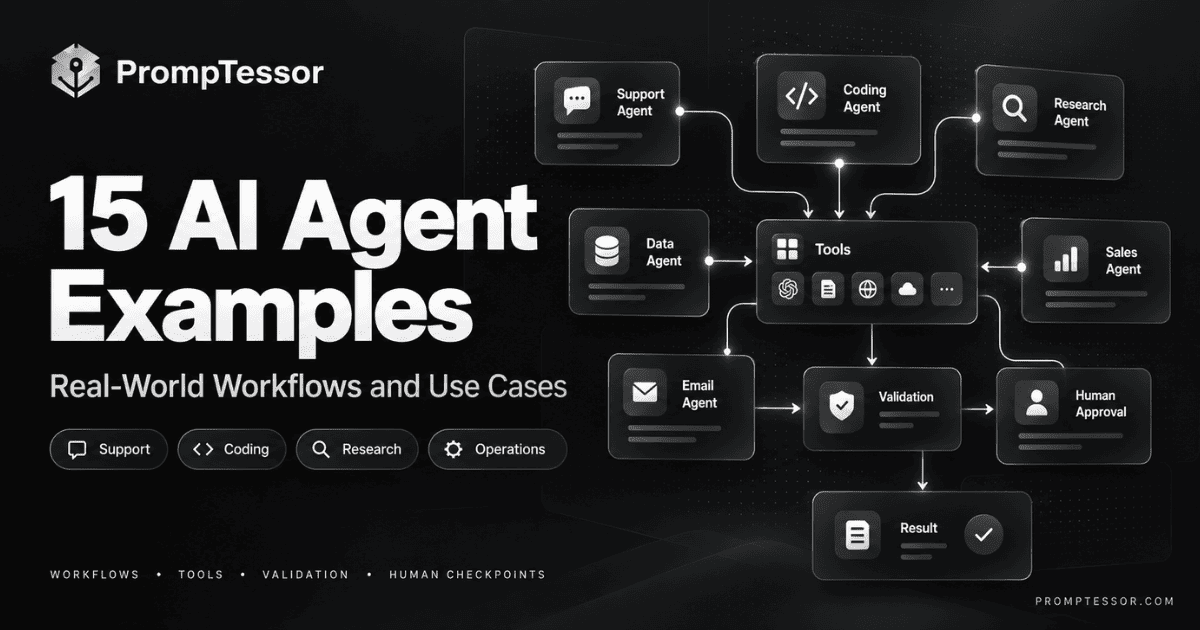
15 AI Agent Examples: Real-World Workflows and Use Cases in 2026
AI agents are most useful when the model must make decisions across multiple steps, use tools, observe results, and adapt. This guide breaks down 15 practical agent examples by trigger, goal, tools, decisions, validation, human checkpoints, and final outcome.
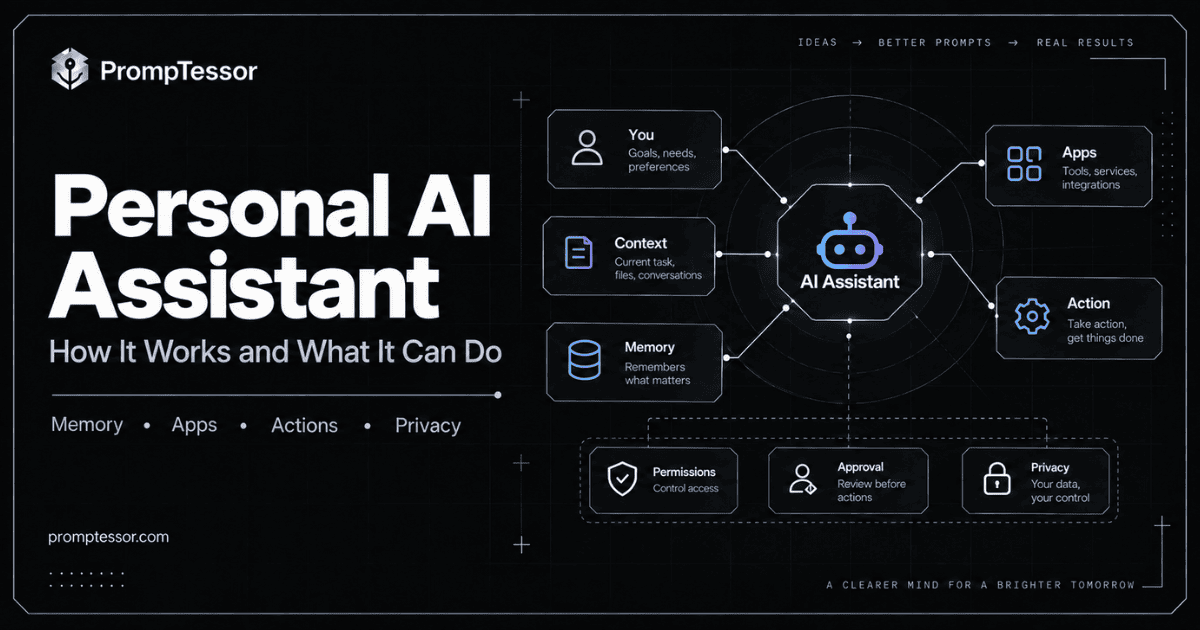
What Is a Personal AI Assistant? How It Works, Remembers, and Takes Action
A personal AI assistant goes beyond answering questions. It can use your preferences, memory, connected apps, and tools to help plan, organize, monitor, prepare, and sometimes take action on your behalf. This guide explains how personal AI assistants work, what they should remember, when they should ask for approval, and how to use them safely.
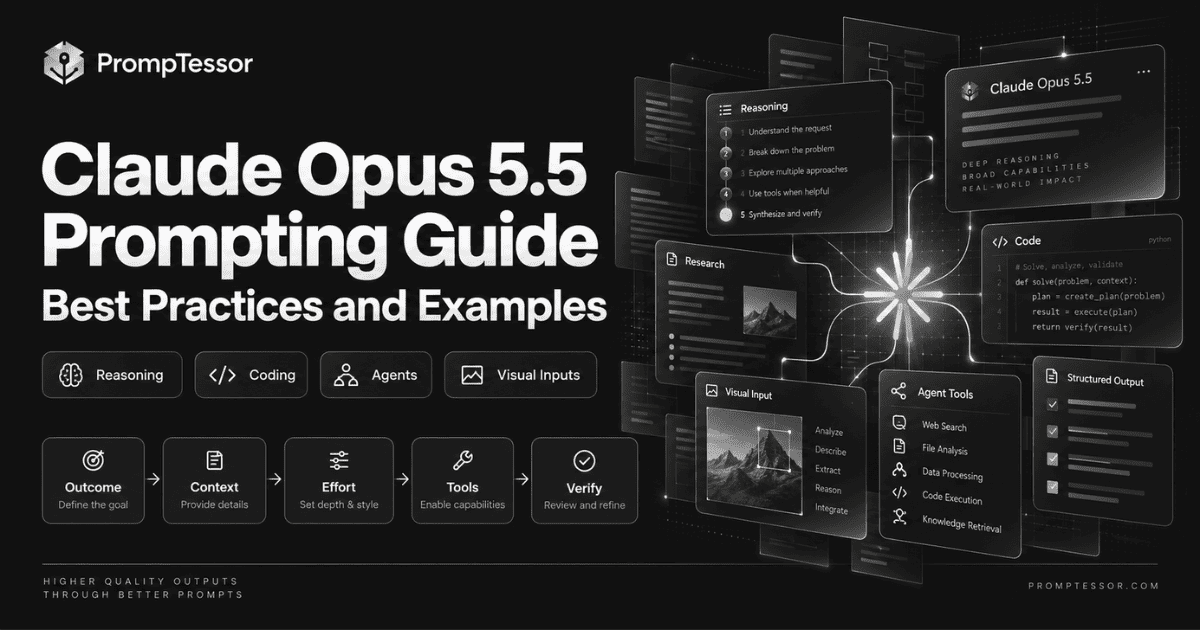
How to Prompt Claude Opus 5.5: Best Practices, Tips, and Examples
Claude Opus 5.5 changes several prompting and runtime patterns from Opus 5. This guide explains how to calibrate effort, structure prompts, handle long-running agents, use tools, work across apps, process visual inputs, avoid generic frontend output, migrate existing prompts, and evaluate results.
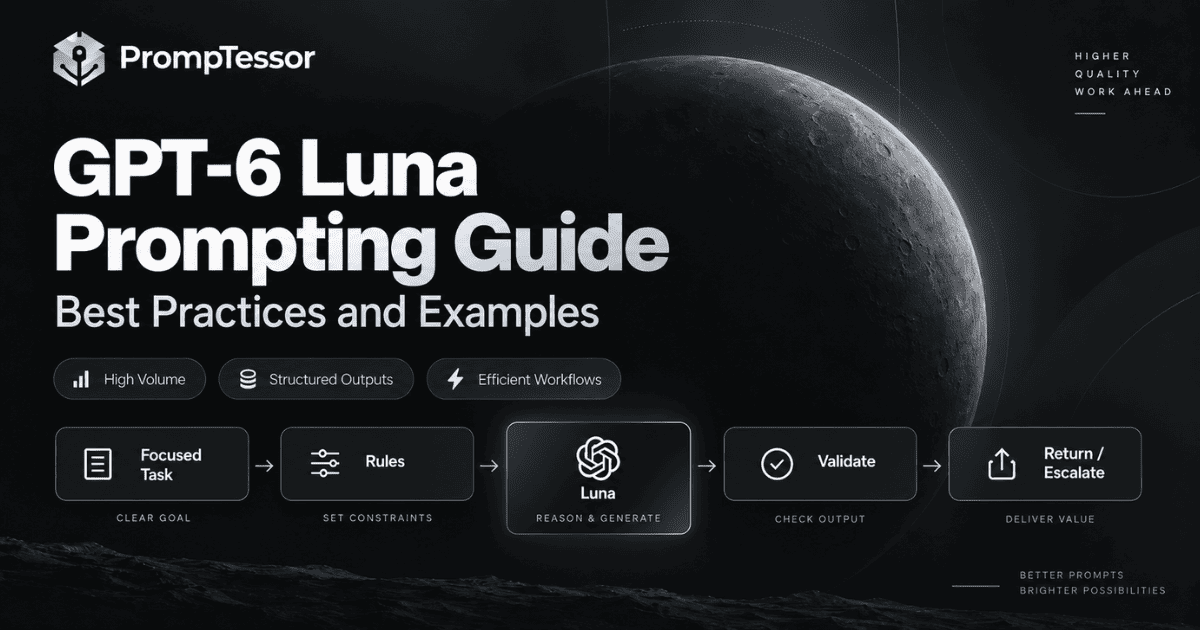
How to Prompt GPT-6 Luna: Best Practices, Efficiency, and Examples
GPT-6 Luna is OpenAI's most efficient GPT-6 model for focused, high-volume tasks. This guide explains how to prompt it for extraction, classification, summarization, structured outputs, tool use, long context, and repeatable workflows while controlling reasoning effort, cost, and escalation.
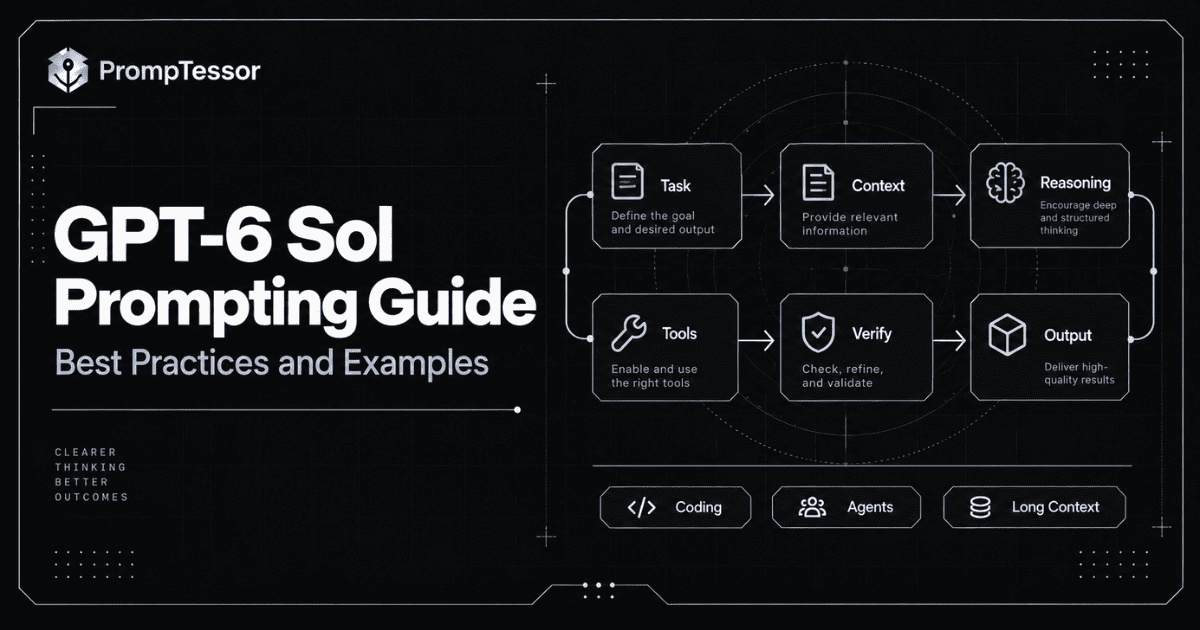
How to Prompt GPT-6 Sol: Best Practices, Reasoning, and Examples
GPT-6 Sol is built for complex coding and agentic workflows, with configurable reasoning effort, a 1.05M-token context window, structured outputs, and a broad tool surface through the Responses API. This guide explains how to prompt it effectively without over-scaffolding the model, including practical patterns for coding, reasoning, tools, agents, long context, verification, and migration from GPT-5.6 Sol.
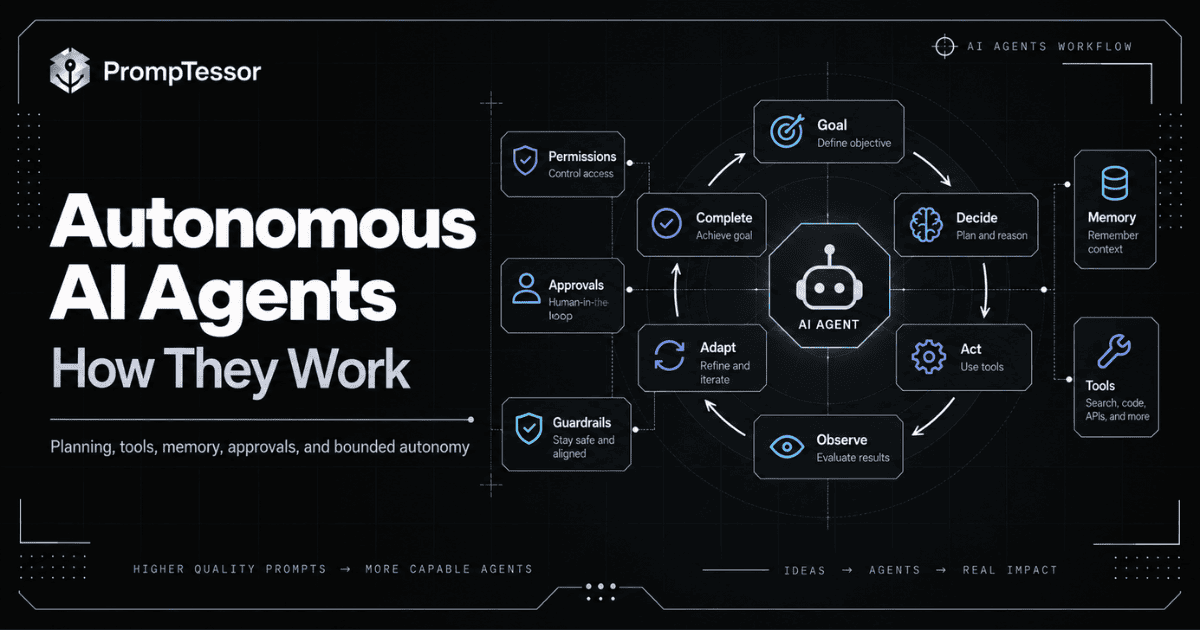
What Are Autonomous AI Agents? How They Work, Act, and Make Decisions
Autonomous AI agents can independently plan and execute multiple steps toward a goal, but useful autonomy is bounded by permissions, policies, approvals, budgets, stopping conditions, and human oversight. This guide explains how autonomous agents work, how autonomy differs from automation, what long-running agents need, and when greater autonomy is actually useful.