Blog
Explore insights, guides, tutorials, and ideas across AI, technology, productivity, and other topics worth reading.
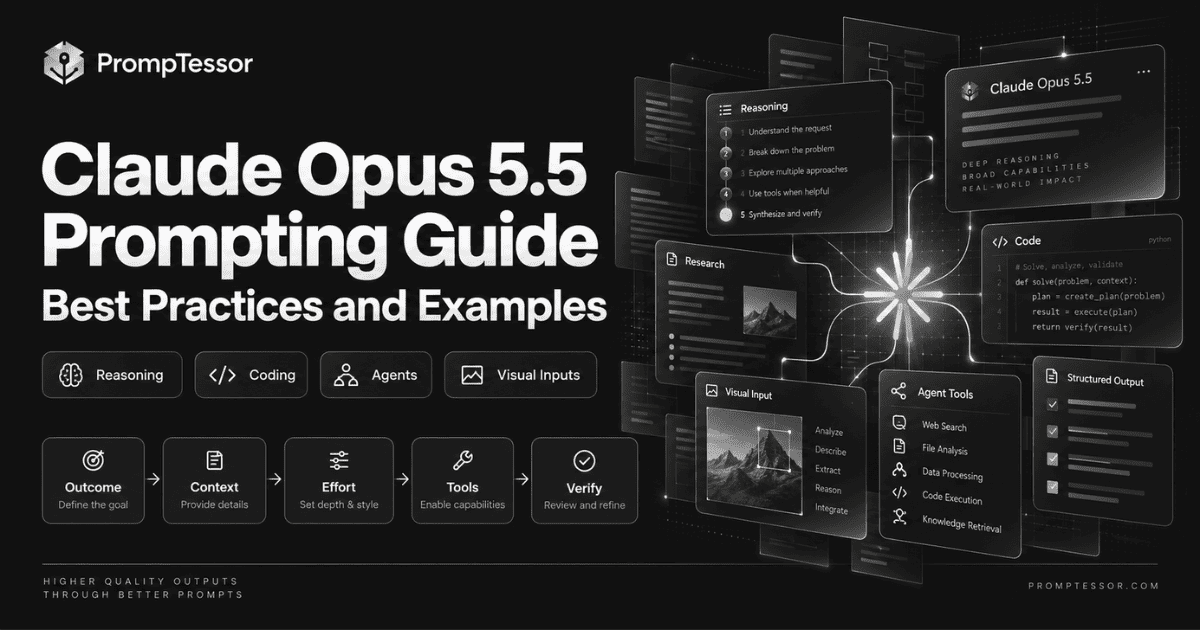
How to Prompt Claude Opus 5.5: Best Practices, Tips, and Examples
Claude Opus 5.5 changes several prompting and runtime patterns from Opus 5. This guide explains how to calibrate effort, structure prompts, handle long-running agents, use tools, work across apps, process visual inputs, avoid generic frontend output, migrate existing prompts, and evaluate results.
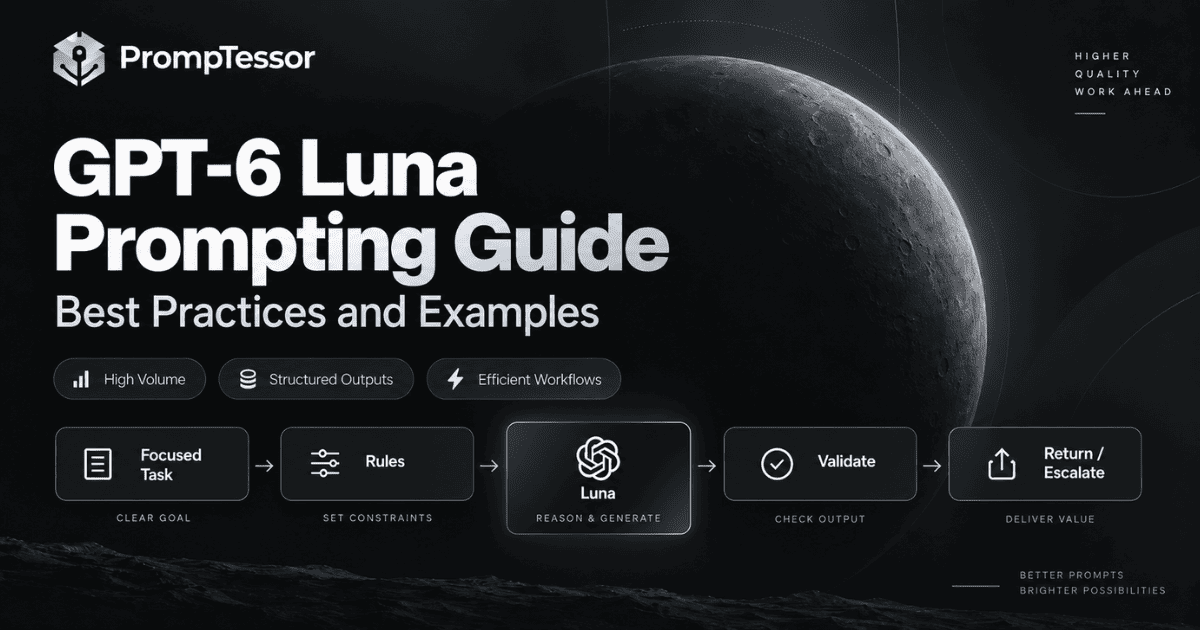
How to Prompt GPT-6 Luna: Best Practices, Efficiency, and Examples
GPT-6 Luna is OpenAI's most efficient GPT-6 model for focused, high-volume tasks. This guide explains how to prompt it for extraction, classification, summarization, structured outputs, tool use, long context, and repeatable workflows while controlling reasoning effort, cost, and escalation.
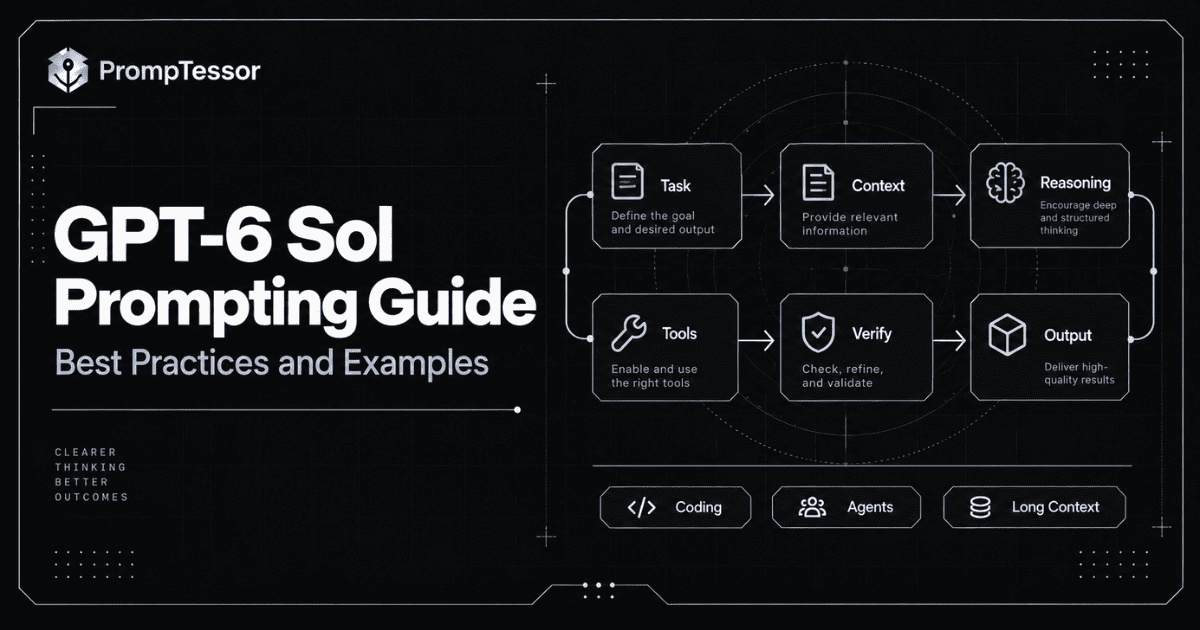
How to Prompt GPT-6 Sol: Best Practices, Reasoning, and Examples
GPT-6 Sol is built for complex coding and agentic workflows, with configurable reasoning effort, a 1.05M-token context window, structured outputs, and a broad tool surface through the Responses API. This guide explains how to prompt it effectively without over-scaffolding the model, including practical patterns for coding, reasoning, tools, agents, long context, verification, and migration from GPT-5.6 Sol.
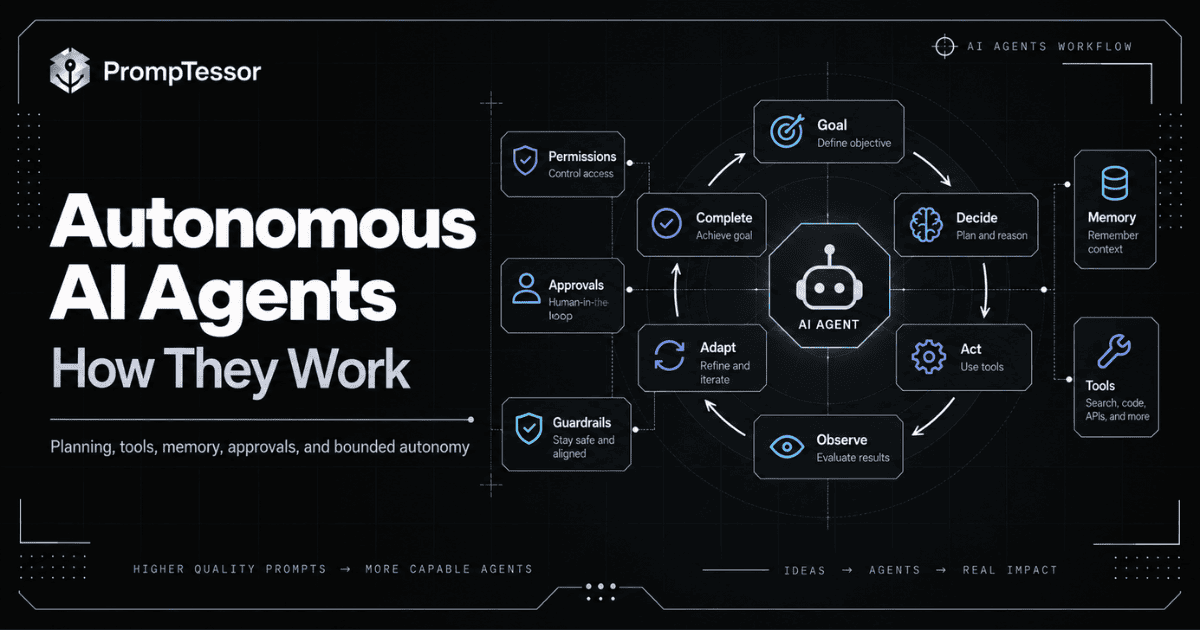
What Are Autonomous AI Agents? How They Work, Act, and Make Decisions
Autonomous AI agents can independently plan and execute multiple steps toward a goal, but useful autonomy is bounded by permissions, policies, approvals, budgets, stopping conditions, and human oversight. This guide explains how autonomous agents work, how autonomy differs from automation, what long-running agents need, and when greater autonomy is actually useful.
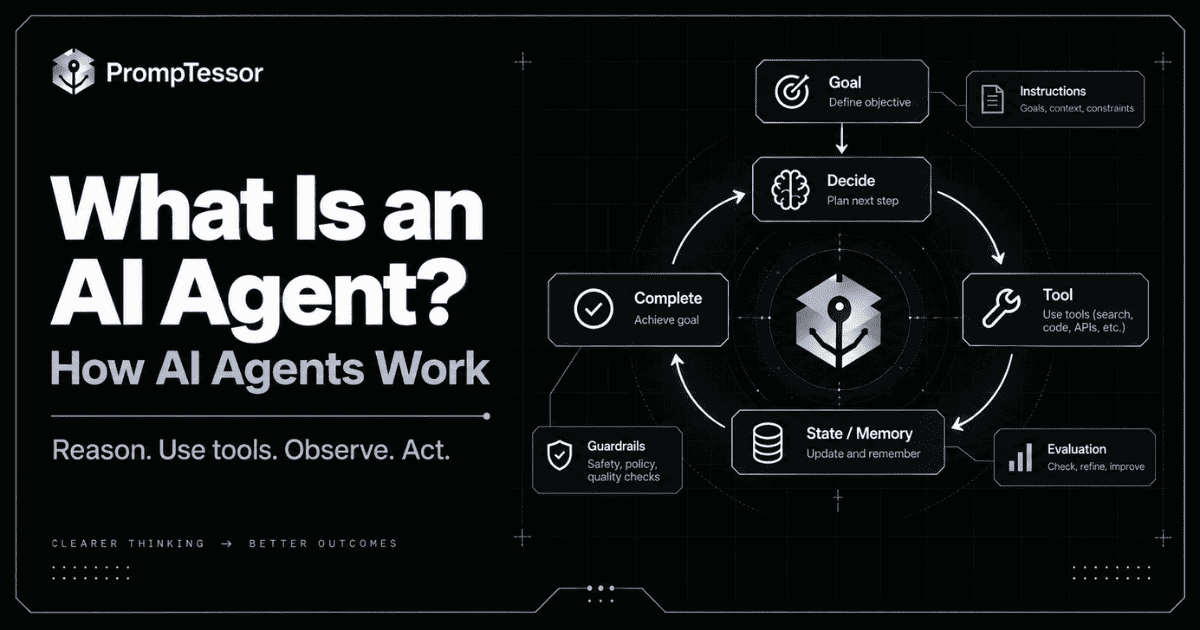
What Is an AI Agent? How AI Agents Work, Use Tools, Memory, and Reasoning
An AI agent is a software system that uses an AI model to pursue a goal, decide what to do next, use tools, observe results, and continue until the task is complete or needs human input. This guide explains how modern AI agents work, how they differ from chatbots and fixed workflows, what components they need, where memory and MCP fit, and what makes an agent reliable in production.
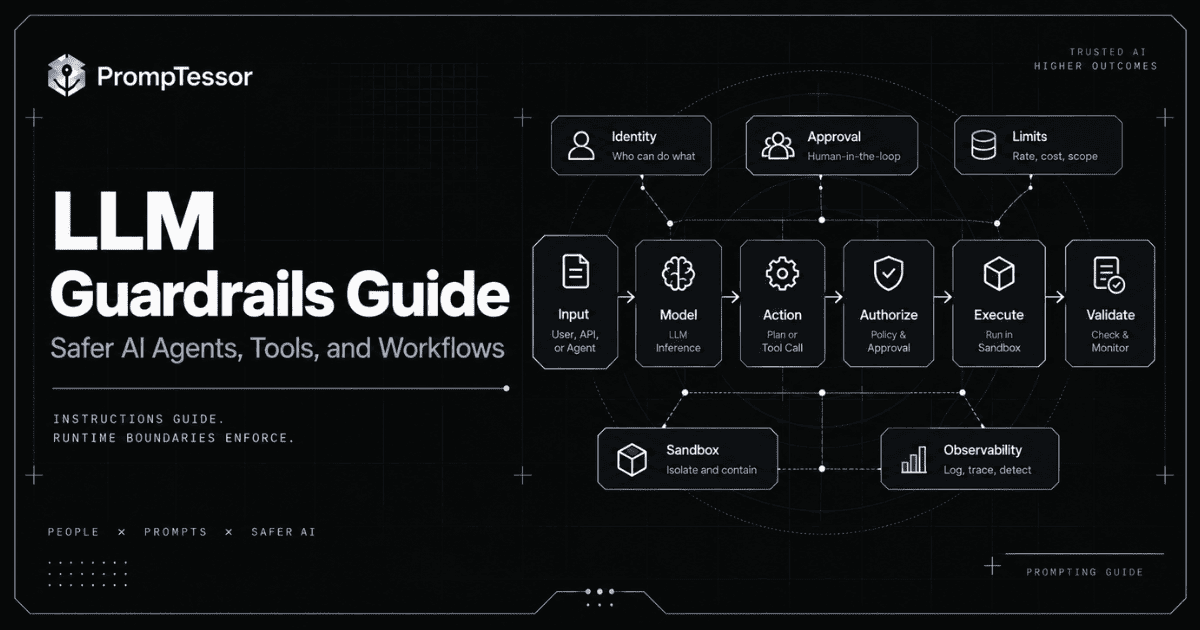
LLM Guardrails: How to Build Safer AI Agents, Tools, and Workflows
LLM guardrails are not one safety prompt or one moderation filter. Reliable AI applications combine input and output checks with real authorization, tool validation, approvals, least privilege, containment, rate and action limits, observability, and evaluation. This guide explains which controls belong in the prompt and which must be enforced by the runtime.
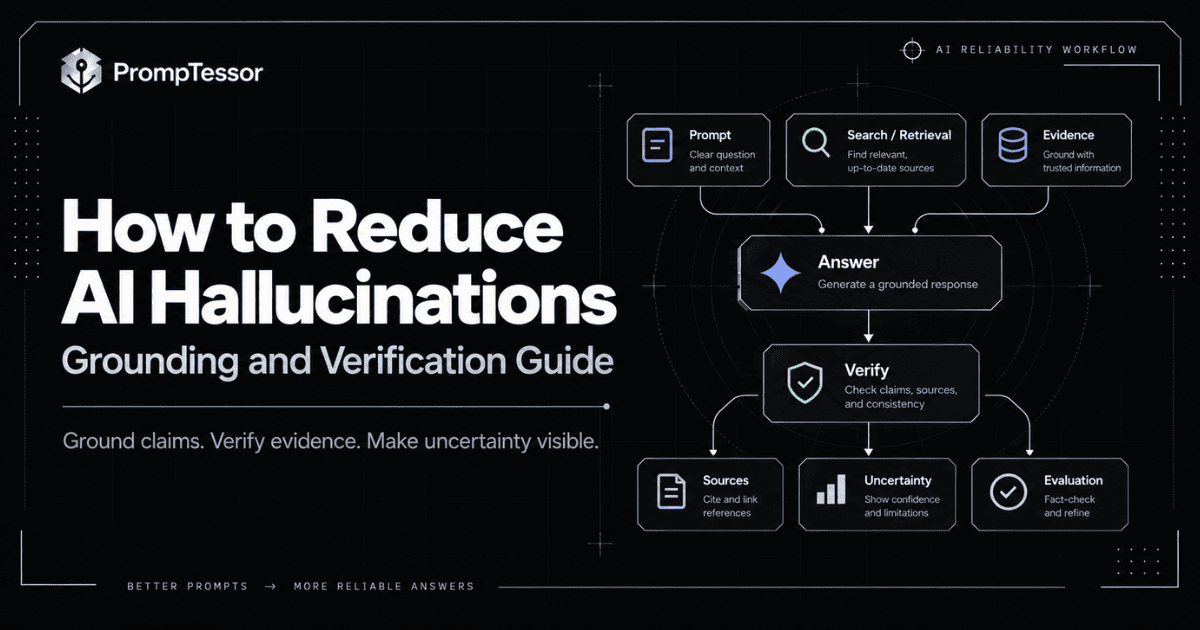
How to Reduce AI Hallucinations: A Practical Guide to Grounding and Verifying AI Answers
AI hallucinations cannot be eliminated with one magic instruction. Reliable AI systems reduce unsupported generation by grounding factual claims in evidence, allowing uncertainty, retrieving current information, verifying citations, and evaluating factuality failures. This guide explains what belongs in the prompt, context, retrieval, tool, verification, and evaluation layers.
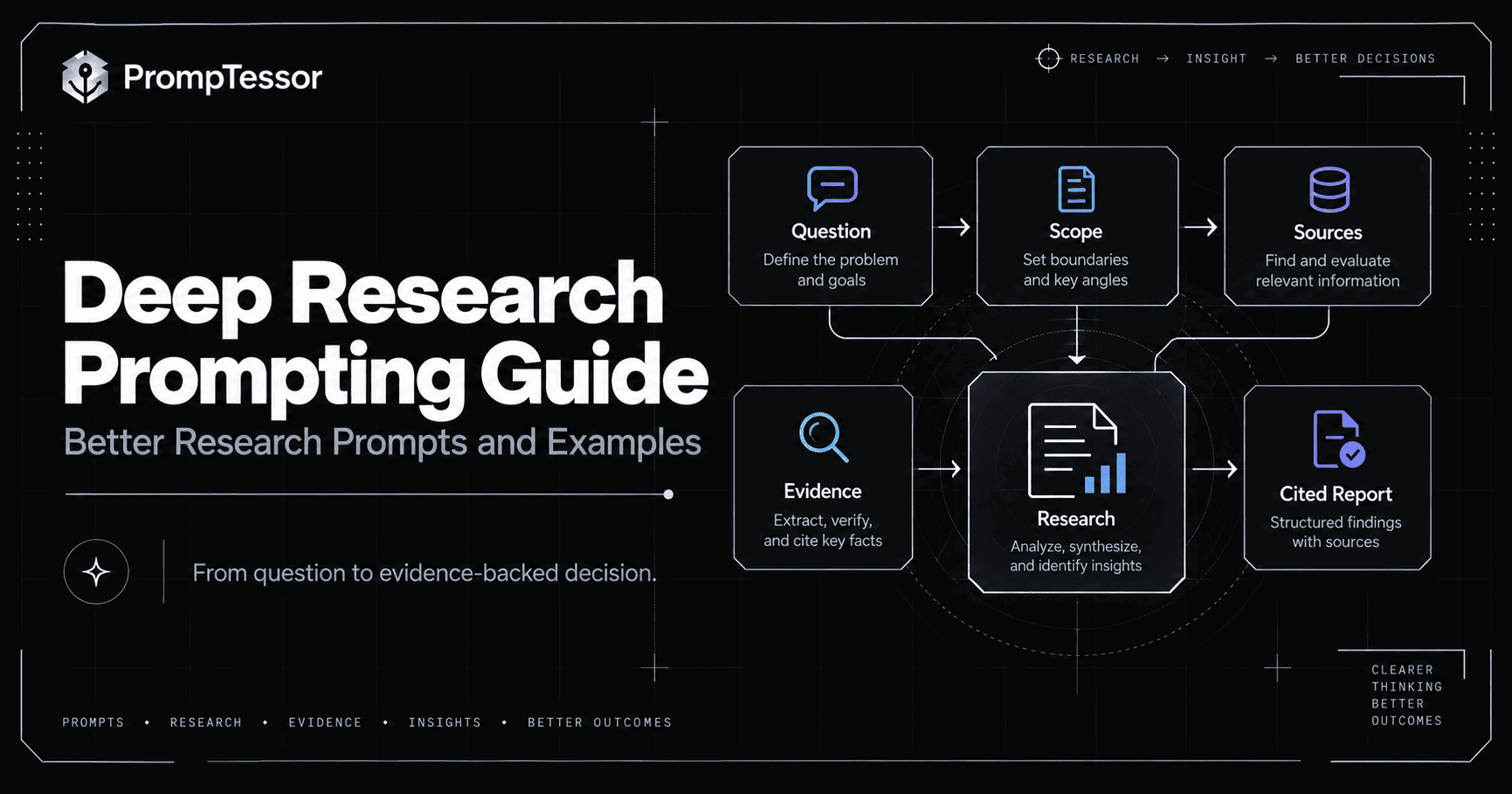
How to Write Better Deep Research Prompts: A Practical Guide With Examples
Deep Research works best when the prompt defines the decision, scope, source priorities, evidence rules, uncertainty handling, and final deliverable before the research begins. This guide provides a reusable framework, provider-specific guidance for ChatGPT and Gemini, and practical prompts for market research, competitor analysis, technical research, vendor selection, and more.

LLM Observability: How to Monitor, Trace, and Debug AI Applications
LLM observability connects prompts, model calls, retrieval, tools, latency, cost, quality, and user outcomes into one production trace. This guide explains what to record, which metrics matter, how to handle sensitive prompt content, how observability differs from monitoring and evaluation, and how traces become debugging and regression data.